Featured

Comprehending the Psychology of Financial Obligation and Healing
Table of Contents
Techniques for Lowering Charge Card Interest in Your Local Area
Consumer financial obligation trends in 2026 reveal a distinct shift in how families handle their monthly responsibilities. With charge card APRs reaching historic highs for many citizens in the United States, the necessity for proactive settlement has never ever been more obvious. High rates of interest do more than simply increase monthly payments. They extend the time it takes to clear a balance, typically turning a fairly small purchase into a multi-year financial concern. Households in any given region are significantly looking for ways to lower the total cost of their loaning to safeguard their long-term monetary health.
Direct settlement with lenders remains among the fastest ways to see a reduction in rates of interest. In 2026, banks are frequently willing to listen to consumers who have a history of on-time payments but are facing genuine monetary pressure. An easy telephone call to the client service department can sometimes lead to a short-lived or long-term rate decrease. Success in these conversations normally needs preparation. Knowing the existing average rates and having a clear record of your loyalty to the institution supplies a strong structure for the demand. Lots of people find that pointing out a competing deal or going over a momentary challenge can move the needle.
Expert guidance often starts with understanding Financial Wellness as a way to regain control. For those who discover direct settlement frightening or unsuccessful, credit counseling companies provide a structured alternative. These organizations act as intermediaries in between the customer and the financial institution, utilizing established relationships to secure terms that a private may not have the ability to get on their own. This is especially efficient for those bring balances across several accounts, where handling numerous various interest rates ends up being a logistical battle.
The Role of Nonprofit Credit Counseling in 2026
Nonprofit credit counseling agencies have actually seen a surge in need throughout 2026 as more individuals look for options to high-interest financial obligation cycles. These agencies, often 501(c)(3) companies, are required to act in the very best interest of the consumer. Agencies with U.S. Department of Justice approval for pre-bankruptcy therapy offer a level of oversight that ensures high requirements of service. These organizations use more than just rate negotiation. They offer comprehensive financial evaluations that look at earnings, costs, and total debt to develop a sustainable path forward.
Stats from early 2026 program that Holistic Financial Relief Programs has actually helped thousands of individuals prevent the long-lasting effects of default. Among the primary tools used by these companies is the financial obligation management program. This program is not a loan however a payment plan where the firm works out with creditors to lower rate of interest and waive particular charges. As soon as the creditors concur to the terms, the consumer makes a single monthly payment to the agency, which then distributes the funds to the various financial institutions. This debt consolidation simplifies the procedure and, more significantly, makes sure that a bigger part of each payment approaches the principal balance rather than interest charges.
Real estate counseling is another aspect of these nonprofit services, particularly for those in surrounding neighborhoods who are having a hard time with both customer debt and home mortgage payments. Agencies authorized by the Department of Real Estate and Urban Development (HUD) can use specific advice that integrates real estate stability with debt decrease. This holistic approach is vital in the 2026 economy, where housing costs and credit card interest are frequently the two largest elements of a family spending plan.
Working Out with Modern Creditors in the Current Market
The monetary environment of 2026 has actually changed how lenders view danger. Algorithms now play a larger function in identifying who gets a rate decrease. Maintaining a consistent payment history is still the most significant factor, but financial institutions also take a look at overall debt-to-income ratios. For citizens of the local community, understanding these internal bank metrics can help during a settlement. If a bank sees that a customer is proactively seeking monetary literacy education, they may see that customer as a lower threat, making them more amenable to reducing rates.
Financial literacy programs have expanded significantly this year. Numerous nonprofit firms now partner with local financial organizations and community groups to provide totally free workshops and online tools. These programs cover whatever from standard budgeting to innovative debt payment strategies. By participating in these instructional tracks, customers get the vocabulary and the confidence needed to talk to their banks. Understanding the difference between a standard APR and a charge APR is a fundamental however effective piece of understanding in any settlement.
Businesses progressively depend on Financial Freedom in West Valley City UT to stay competitive, and consumers need to embrace a comparable mindset toward their individual finances. Treating debt management as a strategic task rather than a source of stress causes better outcomes. For instance, knowing that some creditors provide "difficulty programs" that are different from their standard customer service scripts can change the entire direction of a settlement. These programs are specifically developed for individuals experiencing momentary obstacles, such as a medical emergency or a job change, and they frequently consist of considerable rates of interest caps for a set duration.
Consolidating for Lower Rates in the Area
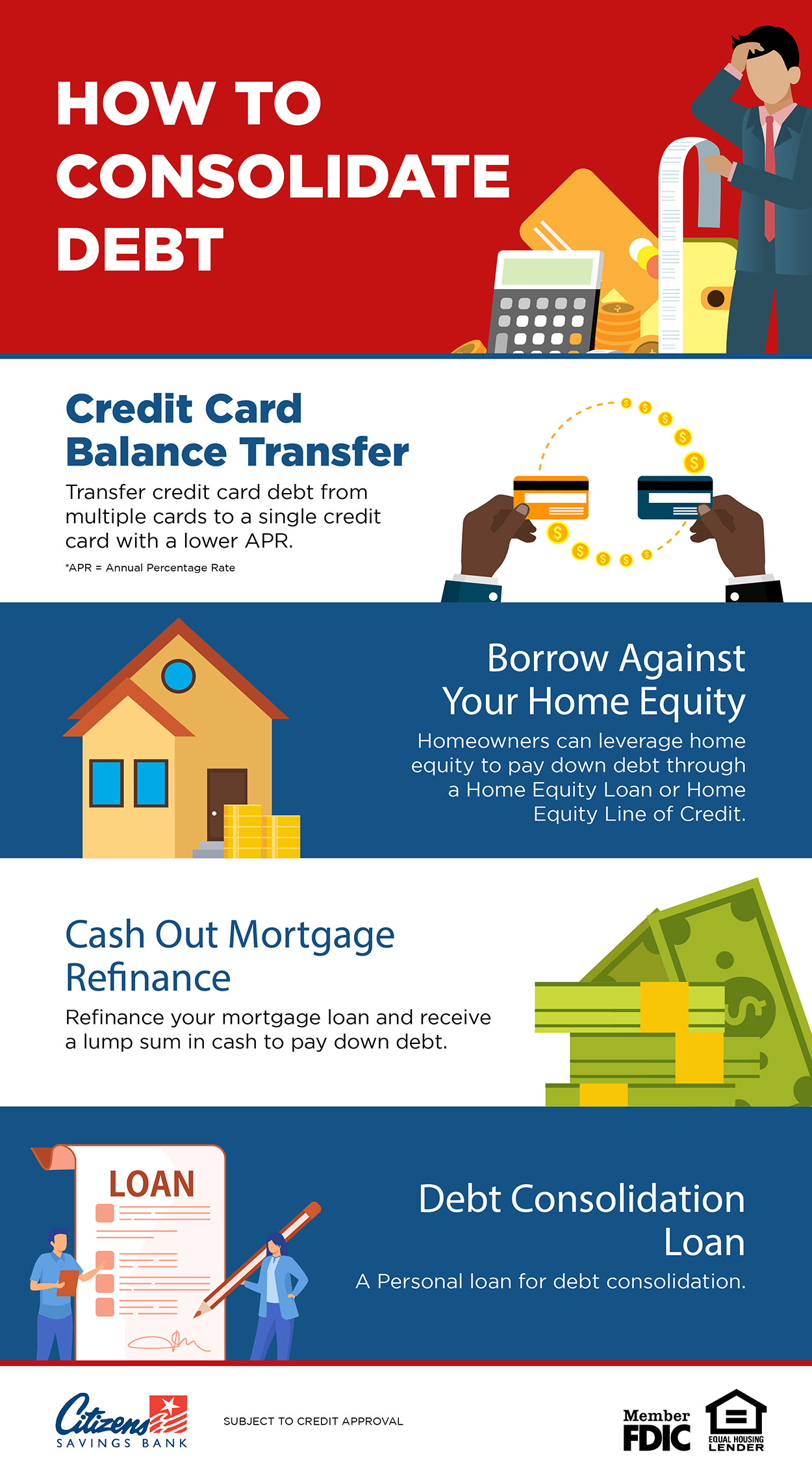
Financial obligation debt consolidation is frequently confused with getting a brand-new loan to settle old ones. While that is one technique, the financial obligation management programs provided by not-for-profit agencies in 2026 provide a different path. These programs do not need a high credit score for entry, which makes them available to individuals who have actually already seen their ratings dip due to high balances. By combining payments into one lower month-to-month amount, the emotional concern of financial obligation is reduced alongside the monetary cost. The reduced rate of interest negotiated by the agency are often locked in throughout of the program, supplying a predictable timeline for becoming debt-free.
Agencies running nationwide, including those with geo-specific services throughout all 50 states, have developed networks of independent affiliates. This makes sure that a person in a specific town can get suggestions that considers regional financial conditions while gaining from the scale and negotiating power of a larger organization. These collaborations permit for a more tailored touch, where counselors understand the specific challenges of the local job market or cost of living.
Pre-discharge debtor education and pre-bankruptcy therapy are also vital services provided by these firms. While the goal is typically to prevent bankruptcy, these sessions are required by law for those who do continue with a filing. In 2026, these educational requirements are seen as a method to make sure that individuals have the tools to reconstruct their credit and prevent falling back into high-interest financial obligation traps in the future. Even for those ruling out bankruptcy, the lessons taught in these sessions-- such as tracking every dollar and comprehending the true cost of credit-- are widely applicable.
Long-Term Financial Stability Beyond 2026
Decreasing rate of interest is an essential action, but preserving that progress requires a shift in how credit is used. The objective of any settlement or debt management plan is to produce adequate space in the budget plan to start developing an emergency situation fund. Without a money cushion, many individuals find themselves reaching for high-interest charge card the moment an unforeseen cost arises. Counselors in 2026 highlight that the genuine success isn't just a lower APR, however the ability to stop relying on credit for day-to-day living costs.
The increase of co-branded partner programs has actually made it easier for people to gain access to help through their workplaces or local recreation center. These programs often incorporate financial obligation management with more comprehensive wellness initiatives, acknowledging that monetary stress has a direct effect on physical and mental health. By bringing these services into the community, firms are reaching individuals earlier in the financial obligation cycle, before the circumstance ends up being a crisis.
Financial self-reliance in any state during 2026 is attained through a mix of aggressive rate negotiation, expert assistance, and disciplined budgeting. Whether through a direct call to a bank or a structured plan with a not-for-profit company, the resources readily available today are more accessible than ever. Taking the first action to resolve high interest rates can save thousands of dollars and years of stress, enabling households to focus on their future rather than their past financial obligations.

Latest Posts

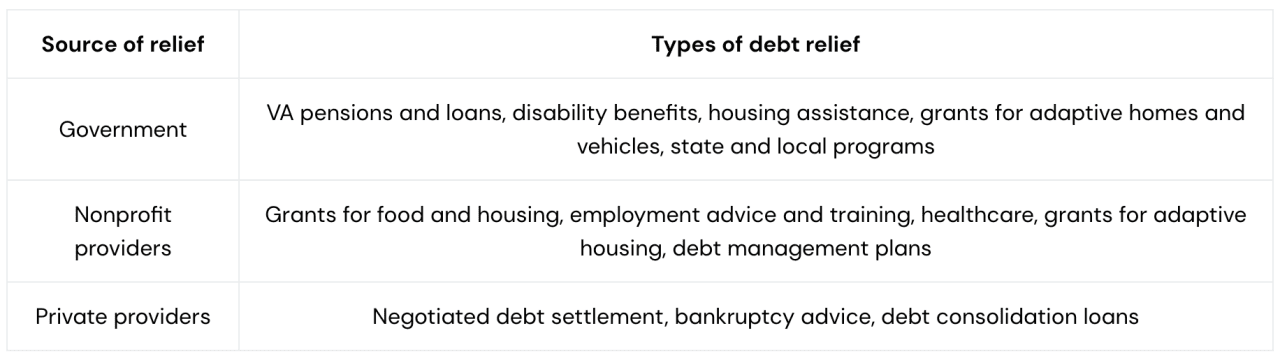
Top Government Debt Relief Solutions for 2026
Procedures for Filing for Chapter 7 Bankruptcy in 2026
Coping With Difficult Debt Collectors in 2026